HONG KONG, December 23, 2025 /PRNewswire/ — In today’s global MedTech landscape, technological advancements are only the starting point. The true measure of scientific research is whether laboratory discoveries can be translated into safe, effective, and widely used clinical products. Yet the development of medical technology is often complex and demanding. In an increasingly rational market environment, building sustainable business models and aligning long-term capital with cutting-edge technologies have become key priorities for innovation-driven companies.
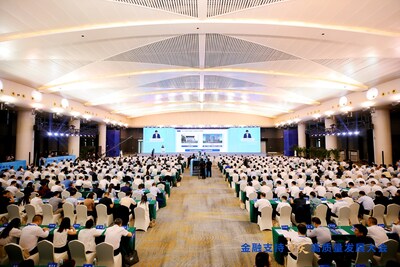
In this context, the 2sd International Cerebro-Cardiovascular Medical Innovation Summit (ICMIS 2025)organized by InnoHK Hong Kong Center for Cerebro-Cardiovascular Health Engineering (COCHE), successfully concluded on December 9 at Hong Kong Science Park. Over the two days, the summit attracted more than 240 people, including 22 global speakers from mainland China, Hong Kong SAR, Japan, the United Kingdom and the United States of America. After the first day focused on advances in AI and imaging technologies in the field of cerebro-cardiovascular health, the second day focused on commercialization strategies, investment considerations and ecosystem development.
The summit brought together translational medicine leaders from world-renowned universities, alongside decision-makers from AstraZeneca, Shanghai Innovation Bank and major venture capital firms. Beyond a purely academic discussion, speakers shared their views on intellectual property strategy, venture capital perspectives and the construction of industrial ecosystems. Through a high-level medical innovation competition, the summit built a practical path to professionally evaluate scientific achievements and business models to accelerate the translation of MedTech to local and international markets.
From scientists to entrepreneurs: reshaping the business logic of medical innovation
In the fourth session of the main forum “From Scientists to Entrepreneurs: Reshaping the Business Logic of Medical Innovation,” a distinguished panel explored how cutting-edge scientific ideas can be transformed into scalable healthcare businesses. The discussion covered the entire spectrum, from advances in imaging to financing and ecosystem development. Professor Susumu MORI, Founder of Corporate‑M and Professor in the Department of Radiology, Johns Hopkins University School of Medicine, Ms. Jennifer CHE, President and CEO of Eagle IP, and Professor Yi ZHANG, Research Professor in the Department of Biomedical Engineering, Zhejiang University, anchored the conversation on medical imaging innovation, intellectual property strategy and clinical translation. Expanding the dialogue, Ms. Scarlett CHEN, Managing Partner of Verge HealthTech Fund, Ms. Dandan YE, Executive Director and Head of Healthcare and Syndication at Shanghai Innovation Bank, and Dr. Chandler CHEN, Executive Director of International Business Development and Head of Ecosystem Alliance at AstraZeneca, delved into venture capital funds, innovative financing models for MedTech startups, and the role of global ecosystem partnerships in advancing the marketing. Collectively, speakers illuminated the journey from laboratory discovery to market adoption, emphasizing that sustainable medical innovation requires strategic intellectual property protection, patient-centered marketing, long-term capital management, and cross-border collaboration between investors, industry, and academia.
Capital and ecosystem synergy: creating a full-chain support system
Medical technology development is distinct from many traditional sectors due to its reliance on long-term capital investment and access to clinical, regulatory and industrial resources. To explore these strategic requirements, the roundtable “Investment Advice for Medical Innovation: Evaluating Deep Technologies, Clinical Impact and Ecosystem Synergies in High-Stakes Healthcare Investments” brought together experts from venture capital, banking and pharmaceutical companies for a high-level, focused dialogue.
Participants highlighted the importance of scalability as a key factor in investment decisions. AI and digital health solutions, by their “build once, deploy repeatedly” nature, are uniquely suited to generate the returns investors seek while also improving access to healthcare. The president highlighted Hong Kong’s strategic position as a bridge between East and West, calling for closer integration of its strong fundamental research capabilities with the engineering and industrialization assets of mainland China and the broader Asia-Pacific region. The conversation also highlighted the need for an early mindset shift to successfully move from academic research to industrial applications. Research teams are encouraged to take commercialization and intellectual property considerations into account early in R&D, providing a smoother path from the laboratory to clinical practice.
Putting technology to the test: roadshow of innovation projects
The discussion about business logic and capital ecosystems ultimately needs to be validated by tangible innovative projects. A true essential bridge between academia and industry, this “Medical Innovation Competition” brought together eight teams from HK Tech 300, HKSTP and COCHE. Each team presented the translational potential of their research to a distinguished panel of nearly twenty leading academics, investors, and industry experts.
To maximize real-world impact, the competition employed an entirely new dual-jury structure instead of a single jury. An expert review panel, comprised of clinicians and scientists, evaluated the scientific rigor, clinical value and regulatory feasibility of each finalist. Meanwhile, an investment jury, comprised of seasoned investors and industry leaders, focused on business models, go-to-market strategies and collaboration opportunities. Each team presented a concise pitch, followed by probing questions from the expert review panel and investment evaluation committee.
This format promoted a two-way learning mechanism. Academic experts gained a clearer view of commercial viability and business risks, while investors received first-hand explanations of technological hurdles, depth of innovation and clinical challenges. Evaluating projects from scientific and financial perspectives led to more comprehensive assessments, and teams received targeted advice on development priorities, regulatory planning and partnership pathways. As a result, the dual panel mechanism was highly appreciated by both panel members and applicants, and was recognized as an effective model for accelerating the move from laboratory innovation to real-world implementation.
ICMIS 2025 ends successfully
With the announcement of the competition prizes, the two days of ICMIS 2025 ended on a high note. And. Professor Kannie WY CHAN, Director of the Hong Kong Center for Cerebro-Cardiovascular Health Engineering (COCHE); Professor in the Department of Biomedical Engineering and the Department of Electrical Engineering at the City University of Hong Kong; and assistant professor in the Department of Radiology and Radiological Sciences at Johns Hopkins University, delivered the closing remarks. She summarizes the summit’s key outcomes and future vision, highlighting the event’s success in exploring the frontiers of AI-based health technologies and digital health platforms, and examining the central role of medical imaging in managing brain and cardiovascular health. The summit provided a platform to discuss translation and commercialization strategies for biomedical innovations, demonstrating how challenges in this area can be transformed into opportunities that benefit local and global communities. She also expressed gratitude to sponsors, including United Imaging, and the panels for their support of COCHE’s first medical innovation competition. Looking forward, she expressed her impatience for the next ICMIS.
ICMIS 2025 not only strengthened Hong Kong’s international academic reputation in cerebro-cardiovascular health engineering, but also provided momentum for the convergence and translation of global medical innovation resources through substantial collaboration agreements and project linking. In the future, COCHE will continue to build an international platform that accelerates the translation of cutting-edge technologies from the laboratory to the clinic, benefiting cerebrocardiovascular disease patients around the world.
SOURCE CHECKED