DAVOS, Switzerland, January 24, 2026 /PRNewswire/ — Leading the charge – Turning risk into reward through a circular economy for electric vehicle batteries and critical minerals, a white paper released by the Ellen MacArthur Foundation at the World Economic Forum 2026 Annual Meeting, marks the first integrated and actionable circular value chain roadmap for electric vehicle batteries, based on real industry practices. It also constitutes a historic step in the cooperation between CATL and the Foundation.
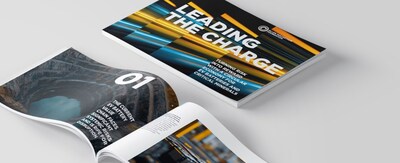
Developed with input from more than 30 leading organizations in the electric vehicle battery ecosystem, including CATL, DHL, Volvo and JLR, as well as research institutes and NGOs, the report sets clear, industry-informed direction on how electric vehicle batteries should be designed, used, recovered and reintegrated to maximize value and reduce systemic risk across the value chain.
As a founding strategic partner of the Foundation’s Critical Minerals mission, CATL has worked closely with the Foundation and its industry peers to translate circular economy principles into practical, deployable actions based on real-world operational experience. The roadmap also supports CATL’s global commitment to energy circularity, including its long-term goal to decouple battery growth from virgin raw material extraction.
It highlights the opportunities that a circular battery system for electric vehicles can open up in the areas of environment, economy, product and broader value creation. By allowing batteries and their essential minerals to be used across multiple life cycles, it reduces demand for newly mined materials, reduces emissions and supports the integration of renewable energy. It also increases economic value by improving material efficiency, reducing waste and operational costs, and creating new revenue streams. At the same time, it strengthens supply chain resilience and distributes economic benefits more equitably across regions, demonstrating that a systemic and circular approach transforms potential risks into value-generating strategic opportunities.
Five positives to unlocking a circular EV battery system
The white paper identifies five interrelated actions needed to keep battery materials in high-value use and build system resilience:
- Design batteries for circularity, not elimination
- Rethinking battery service within optimized energy-mobility systems
- Evolving circular business models that treat batteries as long-term assets
- Build and co-invest in regional circular infrastructure
- Building a circular operating system through data, standards and policies
CATL actions already in practice
CATL is already putting these system-level actions into practice across its operations. By separating the battery from the vehicle, CATL manages the batteries as centrally managed assets, thereby increasing utilization, enabling planned maintenance and ensuring a predictable return at the end of use. Today, CATL operates more than 1,000 passenger vehicle exchange stations and more than 300 commercial vehicle exchange stations, supported by a growing ecosystem of more than 100 partners.
This system integration enables high-quality recovery at scale. CATL’s recycling operations achieve recovery rates of 99.6% for nickel, cobalt and manganese, and 96.5% for lithium, with processing capacity increasing to 270,000 tonnes per year. In parallel, CATL applies alternative chemistries such as sodium-ion batteries, using widely available materials and reducing life cycle carbon emissions per kilowatt hour by up to 60%, thereby strengthening circular performance in mobility, energy trading and storage applications.
Evolve together
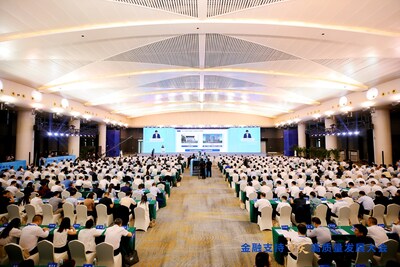
Speaking at the Foundation’s leadership briefing at CATL, Jiang Li, Vice Chairman and Secretary of the Board of Directors of CATL, highlighted: “This report marks a major milestone in the global journey towards a circular battery economy. Circular battery systems must now be expanded across regions, industries and applications – from electric vehicles to energy storage – and adapted to various market contexts.
“As adoption of electric vehicles accelerates, a circular economy for batteries and critical minerals is no longer an option: it is essential for affordability, resilience and long-term growth while reducing environmental and social impacts,” said Wen-Yu Weng, executive lead for critical minerals at the Ellen MacArthur Foundation. “Electric vehicle batteries are strategic assets, and circular approaches are essential to retain their value and ensure critical minerals never become waste. We welcome CATL’s contribution and look forward to continuing our collaboration to help evolve a truly circular battery system and support the broader energy transition.
For CATL, this program directly underpins its path to carbon neutrality – building on achieving carbon neutrality across all its battery factories and its goal of achieving carbon neutrality across the entire value chain by 2035.
The launch of the report marks a first step in CATL and the Foundation’s broader collaboration to accelerate the circularity of critical minerals. The next phase will focus on stress testing these approaches in real-world environments, to understand how the loops of design, use, life extension, collection and recycling work together at scale.
SOURCE Contemporary Amperex Technology Co., Limited (CATL)