


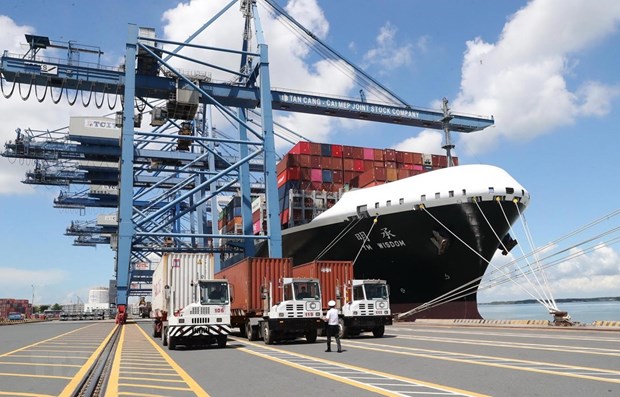
 Illustrative image (Photo: VNA)
Singapore (VNA) – Vietnam’s GDP growth is expected to rebound to 7
percent in 2021, driven by a recovery in external demand, a resilient domestic
economy, and increased production capacity, according to the preliminary
assessment by the ASEAN+3 Macroeconomic Research Office (AMRO).
The office said that after a sharp drop in the second
quarter, Vietnam’s economic growth started to rebound in the third quarter of
2020, with a broad-based recovery.
Manufacturing activity was boosted by a robust export
sector, which benefited from Vietnam’s relatively resilient export mix, as well
as trade diversion from the US-China trade tension. Meanwhile, domestic
consumption recovered following the relaxation of mobility restrictions, a
result of the authorities’ effective COVID-19 containment efforts. Furthermore,
the rebound benefited from an acceleration in the disbursement of public
investment.
AMRO stressed that a protracted and uneven recovery of the
global economy may jeopardise the recovery in external demand. While domestic
demand has picked up after a relatively successful containment of the pandemic,
it remains susceptible to the risk of further waves of COVID-19 infection.
Moreover, scarring effects of the pandemic, such as the impairment of the
balance sheets of the business sector, and the hit on labour
market may undermine the prospect of recovery.
The office also highlighted the necessity for greater fiscal
support through both revenue and expenditure measures in order to support the
nascent economic recovery if the growth momentum are to weaken, while targeted
support to micro, small and medium enterprises and low-income households needs
to continue and be regularly reviewed for its relevance and effectiveness.
Enhancement of support programmes through simpler and
better-targeted disbursement will facilitate the effective use of government
funds, it added.
Given the benign inflation outlook, the office said that it
is essential that monetary policy remains supportive of economic recovery,
keeping financing costs affordable for households and businesses.
With more accommodative financial conditions, heightened
supervision of lending to risky sectors remains warranted to mitigate the risk
of an asset bubble. In addition, enhanced supervision in this sector is
important in order to safeguard the quality of bank credit in the period ahead.
It is essential to ensure continued support for long-term
development issues, such as infrastructure development, human capital
development, social safety net, and particularly public health, while carefully
managing risks to long-term fiscal sustainability, the AMRO said./.