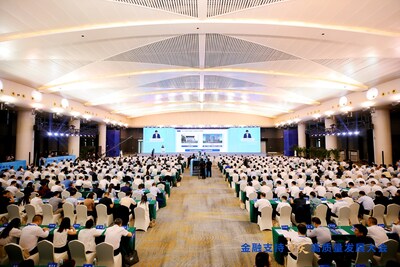
DAVOS, Switzerland, January 24, 2026 /PRNewswire/ — At the World Economic Forum 2026 Annual Meeting in Davos, His Excellency Ahmed Al-Khateeb, Minister of Tourism of the Kingdom of Saudi Arabia, delivered a clear message to world leaders: tourism must be seen as economic infrastructure if it is to drive growth, resilience and human connections in an increasingly fragmented world.
Speaking during his interventions at the World Economic Forum, the minister stressed that tourism should no longer be treated as a discretionary sector, but as a strategic system capable of supporting diversification, attracting long-term investments and creating inclusive jobs in the regions when planned and governed intentionally.
“With an estimated 2 billion international arrivals by 2030, the question for leaders is not whether tourism will grow, but whether it will grow responsibly,” said His Excellency Ahmed Al-Khateeb. “When tourism is conceived as economic, social and cultural infrastructure, it becomes a powerful driver of diversification, resilience and long-term value, not just a cross-border movement. »
Drawing on Saudi Arabia’s experience under Vision 2030, the Minister highlighted how tourism has become the cornerstone of the Kingdom’s economic transformation. In 2025, the Kingdom recorded 30 million inbound visitors, with a target of 150 million by 2030. Saudi Arabia is the world’s largest investor in tourism, with an investment portfolio spanning destinations, aviation, digital platforms and human capital. Tourism now contributes almost 5% of the Kingdom’s direct GDP and employs more than a million people.
He cited projects such as AlUla, Diriyah and the Red Sea as examples of a planned approach to destination development focused on security, sustainability, governance and quality of life. This model, he noted, supported long-term investments, strengthened investor confidence and aligned tourism growth with community benefits and cultural protection.
During the World Economic Forum, His Excellency also highlighted “Beyond Tourism”, a multi-sector initiative developed in collaboration with the World Economic Forum to elevate tourism from an industry debate to a system-level leadership agenda. The initiative aims to align policies, capital and innovation around sustainability, inclusion, resilience and investment.
“Tourism remains undervalued in economic decision-making,” said His Excellency. “Despite representing a $10 trillion global economy, it is still too often absent from infrastructure, trade and industrial policies. To grow tourism, it must be treated as an engine of productivity, resilience and connectivity supported by coherent and data-driven policy frameworks.
Saudi Arabia also highlighted TOURISE, a global platform designed to move tourism from ambition to achievement by bringing together governments, investors and industry leaders to accelerate collaboration and delivery. Since its launch, TOURISE has brought together nearly 10,000 leaders from more than 100 countries and helped catalyze more than $113 billion in tourism-related investments. The next TOURISE global gathering is scheduled for March 2027.
Globally, travel and tourism accounts for approximately 10% of global GDP and supports more than 357 million jobs, making it one of the most inclusive sectors of the global economy. Beyond the economy, the minister noted that tourism continues to play an important role in promoting people-to-people exchanges at a time of heightened geopolitical tensions.
Speaking at the World Economic Forum, His Excellency Ahmed Al-Khateeb highlighted Saudi Arabia’s role in using tourism to help other countries around the world and not just themselves. He called on governments and global institutions to elevate tourism within economic and infrastructure policies, highlighting its role in supporting growth, resilience and international cooperation.
“One of our biggest challenges is not only looking at ourselves, but also at other countries and how we can help. There are 80% of other countries in the world that don’t attract enough tourists, especially in places like Africa and Latin America. We want to strengthen relationships with these places to help them build their own tourism sectors and economies, for global benefit.
“In some of these cases, tourism helps maintain dialogue when formal channels are strained. It builds understanding, trust and connections. Done responsibly, it can act as a stabilizing force and multiplier for global peace.”
Throughout the week in Davos, the Saudi delegation engaged in open and constructive dialogue with leaders from government, business, civil society and academia to promote global stability and prosperity. As part of the Kingdom’s role as a responsible and engaged member of the international community, the delegation demonstrated how Saudi Vision 2030 has become a model for transformative growth.
Saudi House also returned to Davos, following its establishment by the Ministry of Economy and Planning (MEP) in 2025. Throughout the week, it hosted more than 20 sessions, including more than 10 sessions accredited by the WEF, on six themes: bold vision, impact perspectives, people and human capacity, quality of life, investment and collaboration, and welcoming the world. He also launched “NextOn,” a series of influential, educational and inspiring talks hosted by thought leaders.
SOURCE Ministry of Tourism of Saudi Arabia