The national understanding Cancer Network celebrated its 30th The birthday with a series of presentations on changes in cancer care – both in treatment and administration – more new research, and other changes for the workforce in oncology and the patients they serve.
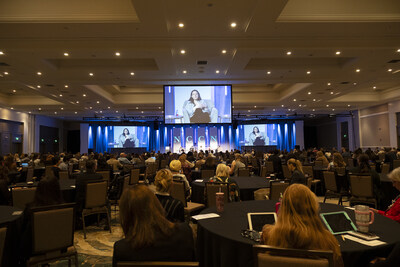
Orlando, Florida.,, April 2, 2025 / PRNEWSWIRE / – The national full cancer network® (NCCN®) – An alliance of the main cancer centers – led 30 years to help people with cancer to live a better life during the annual NCCN 2025 conference, March 28-30 In Orlando, Florida. The annual event brings together the main minds and experts in this area before a multidisciplinary audience to share the latest recommendations for cancer treatment and prevention.
“We are proud to honor the vision of our founders to share recommendations based on evidence and consensus focused through clinical practice guidelines to improve cancer care,” said Crystal S. DenlingerMD, chief executive, nccn. “Over the years, our organization has responded to an accelerated discovery rate quickly with a record number of updates to our guidelines. Our work extends over the spectrum of prevention and risk reduction thanks to survival and palliation after research treatment. NCCN guidelines And Related resources Provide each of the tools to match the right treatment with the right person at the right time in order to get the best possible result. “”
More than 1,500 health professionals in all disciplines on oncology participated in the hybrid meeting Orlando and online. There was more than 200 posters with original and high impact research– printed by the NCCN (Orp) oncology research program and now available in summaries at Jnnccn.orgThe online house of JNCCN – Journal of the National Comprehensive Cancer Network. Discussions on fish bowls have provided opportunities for peer brainstorming on current concerns in the field of oncology, including professional exhaustion, diversity of clinical trial participation and the implications of artificial intelligence (AI) in cancer care.
AI and cancer care
The tools and policies for AI have also been the subject of one of the two main plenary sessions of the conference. The speakers stressed that digital tools have the potential to transform the provision of health care for the best. They highlighted the ability of large -language model tools (LLM) to track the accelerated pace of new knowledge at a rate that the human brain cannot.
However, panelists have also noted that AI will never be able to transmit the feeling that another human being cares about the therapeutic advantages. They said that AI -focused care should only occur when it is beneficial and transparent for all those involved, emphasizing four major considerations:
- Data sharing and storage
- Bias and equity
- Regulation and evaluation
- Integration into clinical work flow
“As AI becomes more and more powerful, it is essential that it maintains human values and has human surveillance,” commented Dennis ChornenkyPOM, MS, MSCEO of Domelabs AI and former AI chief advisor at UC Davis Health.
Mental health, smoking cessation, stigma and cancer care
A second plenary session dealt with the subject of mental health care for people with cancer. The speakers have noted that those who have the greatest assistance needs tend to be the least likely to ask for it. They also pointed out that the emotional social needs are discussed better for treatment, are more likely to complete the full price, tend to have lower mortality rates and have a higher probability of returning to work. There was also a discussion on the mental health needs of caregivers. The panelists have concluded that it is crucial to regularly ask all patients on their emotional well -being – not only at the start of treatment but also during all care transitions.
Additional sessions, such as one on navigation on various stigmata and another in smoking cessation, added to the conversation on how to ask patients the right questions and do so in a way that will make confidence between them and their suppliers.
The smoking withdrawal panel drew attention to the fact that only 15% of cancer patients said they were advised to quit smoking, despite the fact that it considerably improves the results, reduces long -term effects and can reduce the risk of recurrence. Studies have revealed that when providers have engaged with their patients about smoking, they had double the success rate of dependence.
“Treating patients with cancer is clearly difficult. They have a large mountain to climb. But we cannot avoid asking quotes on smoking. This will have an impact on their survival. This will have an impact on the effectiveness of treatment,” said Mary E. ReidMSPH, PHDHead of cancer screening, survival and mentorship at the Roswell Park comprehensive Cancer Center, member of the Panel of NCCN guidelines for lung cancer screening.
“Keep it short but do it,” said James M. DavisMDDuke Cancer Institute, director of the Duke Center for Smoking Seset, and member of the NCCN guidelines for smoking, which noted that many more advice for patients and care continuum providers can be found in patients recently published in NCCN guidelines for patients®:: Quit smoking– Available free of charge at Nccn.org/patientguines by financing the NCCN Foundation®.
Clinical and administrative updates
The conference has presented numerous changing clinical updates of the latest clinical practice of the NCCN in oncology (Directives of the NCCN®) To treat various cancers, notably colorectal, pulmonary, prostate, multiple myelome, mesothelioma, gastrointestinal, gynecological and neck and neck cancer. Updates on hereditary and genetic risk in many types of cancer have also been presented. The speakers have noted the importance of letting people with cancer know that there is an expectation of change over time; Care teams learn with them and will always do their best with the information they have at the time.
The conference provided public members with various roles through the oncology care team with practical information to improve all aspects of cancer care provision, especially in the non -academic framework. Additional sessions have focused on subjects such as nursing care in oncology, oncological urgent care and dentistry, applications in the outpatient framework, navigation models and remote charts.
Save the dates
The annual NCCN conference will return to the Royal Caribe Orlando on March 27 – March 29, 2026.
Before that, the NCCN has several additional opportunities for continuing education and learning policies, in particular:
- NCCN Oncology Policy Summit: Collaboration of primary care and oncology to improve the results of patients In Washington DC At the National Press Club on May 6, 2025.
- NCCN ONCOLOGY POLICY SUMMIT: The landscape evolving of artificial intelligence in care against cancer in Washington DC At the National Press Club on September 9, 2025.
- Annual NCCN 2025 Congress: Hematological malignant tumors™ at Hilton San Diego Bayfront, San Diego, California on October 10 – 11, 2025.
Visit Nccn.org For more information on events and resources that define and advance quality, efficient, equitable and accessible to cancer care and prevention so that everyone can live a better life.
On the national full cancer network
The national full cancer network® (NCCN®) marked 30 years as a non -profit alliance of Leading cancer centers devoted to patient care, research and education. The NCCN is devoted to defining and advancing quality, efficient, equitable and accessible to cancer care and prevention so that all people can live a better life. NCCN clinical practice guidelines in oncology (Directives of the NCCN®) provide transparent recommendations, based on evidence and consensus, cancer processing, prevention and support services; They are the standard recognized for clinical orientation and policy in cancer management and the most complete and most frequently updated clinical practice guidelines in any field of medicine. NCCN directives for patients® Provide expert information on cancer processing to inform and authorize patients and caregivers, by supporting the NCCN Foundation®. The NCCN also advances continuing education, global initiatives, research policy and collaboration and publication in oncology. Visit Nccn.org For more information.
Media contact:
Rachel Darwin
267-622-6624
darwin@nccn.org
National Source Comprehensive Cancer Network