Education cannot wait and the Geneva Global Center for Education in Emergencies calls for sustained support
NEW YORK, November 7, 2025 /PRNewswire/ — Members of the Geneva Global Hub for Education in Emergencies (EIA Hub), including Education Can’t Wait (ECW), call on world leaders and other stakeholders to put children’s education at the heart of discussions when they gather in Belém, Brazil, for the COP30 climate summit in November 2025.
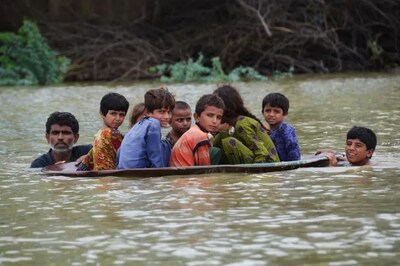
The climate crisis is having a devastating impact on the education of children and young people, particularly those most at risk and vulnerable. Globally, at least 242 million students – from preschool to upper secondary school – had their learning disrupted due to climate-related events in 2024. Heatwaves alone affected the learning of more than 118 million children in May 2024 alone. Climate-induced hazards and shocks can seriously affect the quality of education, for example by damaging the environment learning or impacting the well-being and capabilities of teachers. Such interruptions expose children to critical protection risks, while significantly increasing the risk of dropping out of school.
The impacts of climate change on education also exacerbate existing risks and inequalities, including those related to gender, ethnicity, disability, age and displacement status. Rising temperatures and other climate-related stressors exacerbate other situations that can hinder access to education, such as armed conflict and violence, loss of livelihoods, health impacts or child, early and forced marriage.
Despite this, education has long been chronically neglected in climate discussions and funding. From 2006 to March 2023, only 2.4% of funding from major multilateral climate funds supported projects incorporating child-friendly activities. Similarly, governments have often neglected children’s rights in general, and education in particular, in their policy strategies to combat climate change. During the last cycle of Nationally Determined Contributions (NDC 2.0), less than half of NDCs met child-sensitive standards.
Education is a powerful tool to combat the climate crisis. Making education systems more climate-responsive will help create safe and effective learning environments and ensure continuity of learning, while equipping students with the skills, knowledge and mindset needed to promote climate-resilient families and communities.
At the same time, investing in education is a cost-effective tool to address the effects of the climate crisis. More broadly, a small investment can generate benefits for decades, fostering safer and more stable societies. Every dollar a government spends on education increases GDP by an average of $20.
Without urgent action, tens of millions more children and young people risk being unable to access education due to the climate crisis. This will have far-reaching consequences, not only for their own lives, but also for the economic development, social cohesion and long-term stability of their wider communities.
The declaration calls on governments, civil society, philanthropies and other donors, and other actors to:
- Ensure that education is resourced and prioritized in national climate action strategies and related processes, including in NDCs and national adaptation plans (NAPs).
- Increase investments in climate-resilient education strategies, leveraging opportunities for more strategic co-financing across sectors. This means prioritizing the education of all children and young people, particularly in climate-vulnerable, conflict-affected and fragile contexts, while enabling continuity of learning and resilience of the education system.
- Ensure that education is integrated into loss and damage strategies, assessments, costs and financing proposals for fragile and crisis-affected countries.
- Improve the inclusion, participation and representation of children and young people in the development of climate policies, notably through child-friendly mechanisms in NDCs, NAPs and other climate plans.
- Invest in climate-resilient school infrastructure and climate-related teaching and learning, for example by integrating green skills and climate education into national curricula, including in emergencies, to enable children, young people and teachers to become agents of change for resilience, climate action and a just green transition.
SOURCE Education Can’t Wait