
Dubai, UAE, Oct. 06, 2026 (GLOBE NEWSWIRE) —
For decades, business success followed a relatively predictable formula. Organizations invested in scale, expanded distribution networks, acquired market share, optimized operations, and built barriers to entry. The underlying assumption was simple: the larger and stronger a company became, the more secure its future would be.
Today, that assumption is being challenged from every direction.
Markets are evolving at a pace few leaders have experienced before. Entire industries are being reshaped by technology. New competitors emerge without the burdens of legacy infrastructure. Customer expectations shift faster than traditional planning cycles can accommodate. Artificial intelligence is compressing innovation timelines and lowering the barriers to disruption.
In such an environment, many of the advantages that once guaranteed success have become temporary.
As a result, a different question has emerged at the center of organizational survival and growth:
Are we still relevant?
Not successful. Not profitable. Not established. Relevant.
Markets no longer reward organizations solely for what they have achieved. They reward those that continue to matter.
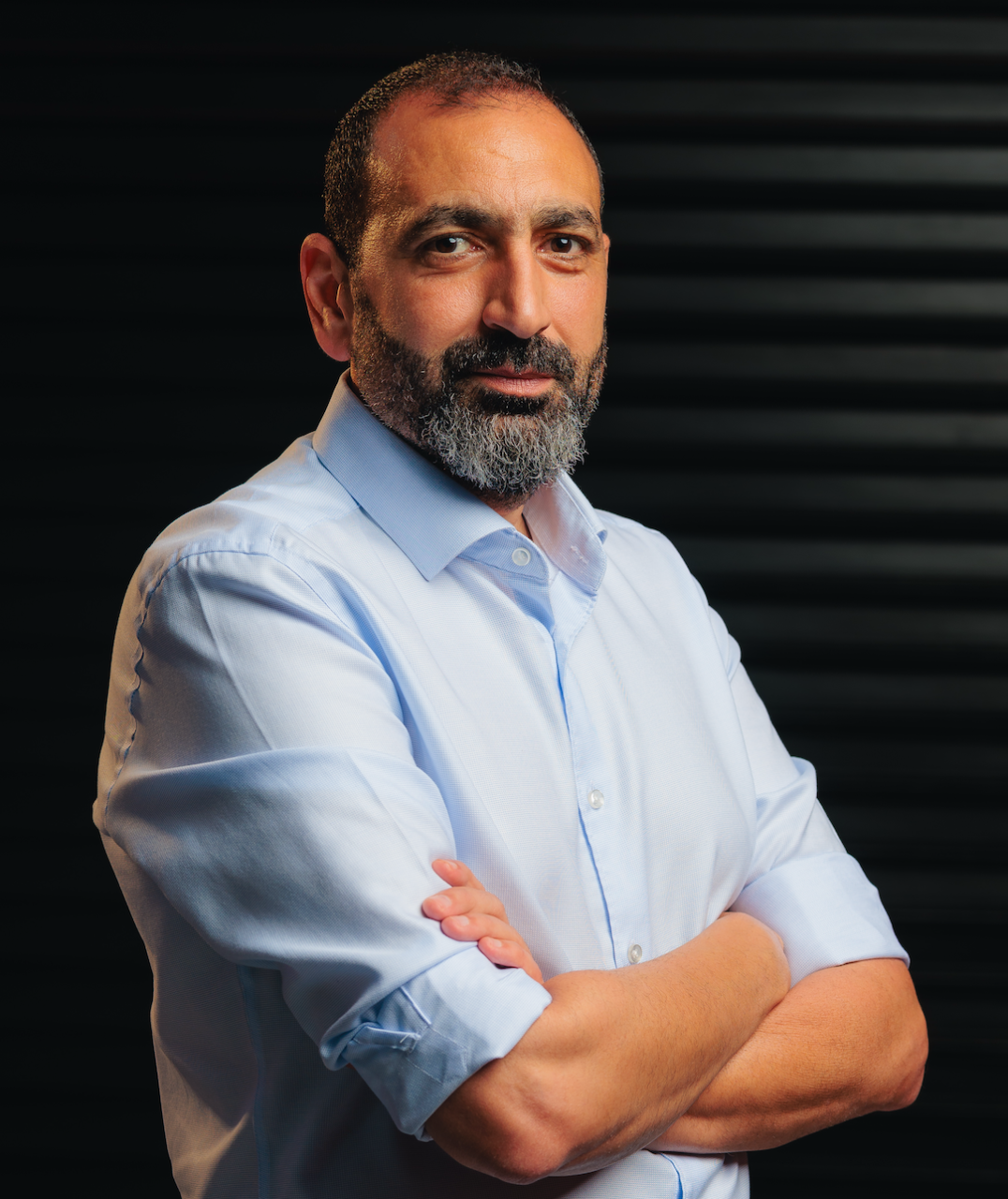
Mohammad Mousa, Founder of MentalX, has worked across entrepreneurship, consulting, telecommunications, technology, digital trust, national transformation programs, and executive leadership roles across multiple regions and industries. Through these experiences, one pattern has appeared with remarkable consistency.
Organizations struggle because they gradually lose relevance while remaining convinced they still possess it.
Relevance erodes slowly and silently. Customers change. Markets evolve. Technology advances. Behaviors shift. New expectations emerge.
Yet organizations continue operating under assumptions that were formed in a very different environment.
Performance remains acceptable. Revenue remains steady. Existing customers remain loyal enough. Success creates confidence, and confidence creates comfort.
The danger is that comfort can disguise change.
Many leaders assume that strong current performance confirms future security. Unfortunately, history repeatedly demonstrates the opposite. Some of the world’s most successful organizations were disrupted not because they lacked capabilities, but because they became attached to the capabilities that had made them successful in the first place.
The challenge was never competence. The challenge was adaptation.
Success can become a trap when it convinces organizations that the future will look like the past. Markets do not operate that way, and customers certainly do not.
As Mohammad Mousa often emphasizes: “Growth can be purchased. Relevance must be earned.”
Organizations can accelerate growth through investment, acquisitions, market expansion, pricing strategies, and operational scale. Relevance operates under a different set of rules.
Relevance requires continuous learning, continuous listening, continuous adaptation, and continuous reinvention. It requires leaders to embrace discomfort and ask questions many organizations prefer to avoid.
Are we solving problems that still matter?
Are our customers choosing us because of what we were or because of what we are becoming?
If we started this business today, would we build it the same way?
Would we design the same products, structure ourselves in the same way, and invest in the same priorities?
These questions are uncomfortable because they challenge existing success. Yet they are often the very questions that determine future success.
One of the greatest threats to relevance is what Mohammad Mousa describes as the “relevance gap.”
The relevance gap emerges when an organization’s perception of itself begins to diverge from the market’s perception of it.
Internally, the company still sees itself as innovative. Externally, customers see complexity.
Internally, the company sees strength. Externally, customers see friction.
Internally, leaders believe their offerings remain differentiated. But the market sees alternatives.
The relevance gap develops gradually. By the time it becomes visible through declining performance indicators, competitors have often been capturing value for years.
What makes this challenge particularly dangerous is that most organizations are measuring historical performance and not future relevance.
Revenue, costs, or operational efficiency are important metrics. None of them guarantee relevance, though.
Revenue often reflects yesterday’s decisions. Relevance determines tomorrow’s opportunities.
This distinction is becoming increasingly important as artificial intelligence reshapes the business landscape. AI is often presented as the next great competitive advantage. In reality, AI is more accurately described as a force multiplier.
Companies that genuinely understand their customers will use AI to create remarkable experiences and unlock new value. Companies that have already begun losing touch with customer realities may simply accelerate existing problems with more sophisticated technology.
Technology alone does not create relevance. Technology enables relevance.
Technology creates possibilities. Relevance determines whether those possibilities matter.
This reality touches every aspect of business transformation.
Many organizations approach transformation as a technology initiative, a restructuring effort, or an operational improvement program. Yet successful transformation is fundamentally about maintaining relevance in a changing world.
Viewed through this lens, relevance is not a marketing issue.
The most effective leaders understand that relevance is not something an organization achieves once and then retains indefinitely. Relevance is dynamic. It must be renewed continuously.
Organizations that cultivate these qualities become more adaptive. They become better at anticipating change rather than reacting to it. They remain closer to customers, more responsive to market shifts, and more resilient during periods of disruption.
In a world defined by accelerating change, this adaptability becomes one of the most valuable capabilities an organization can possess, with relevance serving as its foundation.
About MentalX
MentalX is an advisory and transformation firm supporting organizations across EMEA with strategy, business transformation, technology transformation, data, AI, cybersecurity, and execution. The company focuses on helping organizations connect strategy with practical implementation and measurable business outcomes.
Media Contact
Mohammad Mousa
Founder, MentalX
LinkedIn: Mohammad Mousa on LinkedIn
Website: MentalX
Email: mohammad.mousa@mentalx.eu
Note : Information contained on this page is published by SP Tech Solutions and content provided by authorized third party content provider. SP Tech Solutions and this Site make no warranties or representations in connection therewith.
CONTACT: Mohammad Mousa
Founder, MentalX
Linkedin : https://www.linkedin.com/in/mousa-ae/?isSelfProfile=false
Website : https://mentalx.eu/
Email : mohammad.mousa@mentalx.eu

Nguồn: GLOBENEWSWIRE – Đơn vị phát hành hoàn toàn chịu trách nhiệm về nội dung thông báo này.

