BARCELONA, Spain, March 4, 2026 /PRNewswire/ — Huawei has provided digital connectivity to 170 million people in remote areas in more than 80 countries, surpassing its commitment to the International Telecommunications Union’s (ITU) Partner2Connect (P2C) digital coalition.
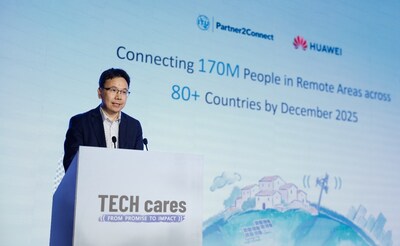
The announcement was made by Yang Chaobin, CEO of Huawei ICT BG, during the company’s TECH Cares forum in Barcelona. He noted that this achievement exceeds Huawei’s commitment in joining the ITU P2C Digital Coalition in 2022: connecting 120 million people in remote areas by 2025. Yang expressed gratitude to Huawei’s customers and telecom partners for their collaborative efforts.
The forum brought together around 80 guests from governments, industries, partner organizations and international bodies. Participants engaged in in-depth discussions on the urgent need to advance digital inclusion in the AI era, exploring practical solutions and building consensus for multi-stakeholder collaboration.
In his opening speech, Yang highlighted that despite rapid advances in AI, the digital divide persists and is likely to widen further. “High-speed digital networks and robust computing capabilities provide essential foundations for an inclusive and sustainable AI era,” he said. Fulfilling the ITU P2C Commitment, he added, reflects Huawei’s continued commitment to innovation, providing remote communities with better access to healthcare, education and financial services through digital connectivity.
Cosmas Zavazava, Director of the ITU Telecommunication Development Bureau, praised Huawei’s achievements and its work to bridge the digital divide. “Connecting rural and underserved communities requires innovative business models, inclusiveness and effective use of communications resources, as well as community engagement and sustained investment in local capacity. I applaud Huawei’s commitment to universal and meaningful connectivity and am proud of our strong and successful partnership.
According to Jeff Wang, Huawei’s President of Public Affairs and Communications, digital inclusion is based on two pillars: inclusive connectivity and digital skills empowerment. To close the digital skills gap, Huawei is partnering with governments and organizations to support students, youth, seniors and women through three initiatives: expanding digital access, providing digital skills training and developing STEM curriculum.
Since its launch in 2019, Huawei’s Skills on Wheels program has delivered mobile digital training to more than 130,000 people in 21 countries, opening new opportunities for underserved communities.
Marina Madale, Head of Sustainability and Shared Value at MTN Group, says connectivity is not a privilege, but fundamental infrastructure for Africa’s growth. Agreeing with Jeff Wang, she noted that MTN is prioritizing the expansion of rural connectivity, device accessibility and the development of digital and AI-ready skills.
In rural network innovation, Huawei has continuously upgraded its Rural Series solutions since 2017 to improve affordability and deployment efficiency. Launched in November 2025, Huawei RuralCow extends its coverage to villages of approximately 1,500 inhabitants with the support of MTN Nigeria. These solutions helped achieve the goal of connecting 170 million people while boosting local economies and enabling broader access to digital public services.
During the forum, guests shared the progress of their collaboration with Huawei and expressed their willingness to deepen cooperation. All participants agreed that advancing digital inclusion in the AI era requires joint efforts from governments, operators, international organizations and businesses.
In the future, Huawei will continue to drive innovation in rural network technologies, deepen open collaboration, and accelerate the empowerment of digital skills. Through concrete actions, the company will continue to contribute to a more equitable and sustainable digital world.
SOURCE Huawei Technologies Co., Ltd