

LAGUNA, PHILIPPINES –
Media OutReach Newswire – 29 July 2026 – FCC (Philippines) Corp., a subsidiary of Japan’s FCC CO., LTD. and a key global supplier to leading automotive and motorcycle brands including Honda, Yamaha, Suzuki and Kawasaki, Ford, Harley-Davidson, BMW, among others, has signed a long-term solar agreement with Peak Energy to power its clutch systems facility in Laguna with onsite renewable energy.
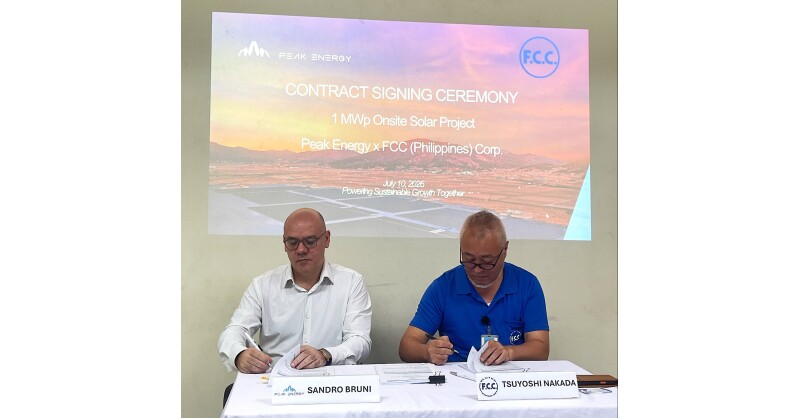
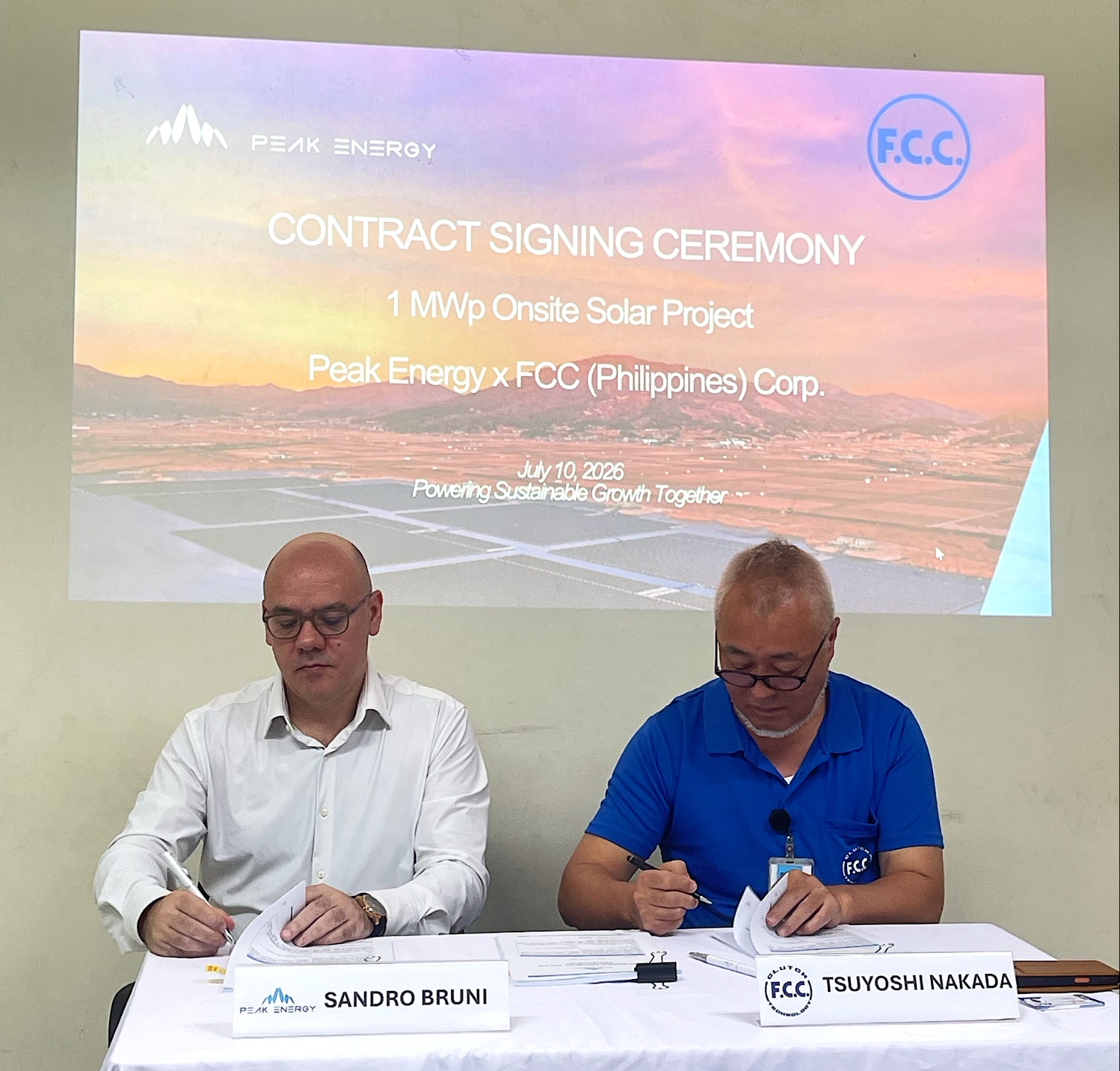
Sandro Bruni (Peak Energy) and Tsuyoshi Nakada (FCC Philippines Corporation) at the Signing Ceremony held on 10th of July
The system is expected to generate approximately
1,500 MWh in its first year of operation from a
1 MWp onsite solar installation, delivering electricity to FCC Philippines at a price approximately
30% lower than grid tariffs. This is expected to avoid approximately
650 tons of CO₂
annually,
equivalent to avoiding the consumption of almost 252,000 liters of gasoline.
Under the
15-year agreement, Peak Energy will design, finance, construct, own and operate the solar system, with FCC Philippines purchasing the electricity generated at no upfront capital cost. The structure allows FCC Philippines to access clean, competitively priced power while Peak Energy manages construction and ongoing operations and maintenance.
FCC CO., LTD. is the undisputed global leader in the motorcycle clutch market, with more than 50% global market share, and a leading supplier of automotive clutch components worldwide. The company and has manufactured in the Philippines since
1993, supplying integrated clutch systems not only to the four of the world’s four largest motorcycle OEMs, but also to other established global brands across both the two-wheel and four-wheel industries. Global automotive supply chains are under growing pressure to reduce embedded emissions, and the agreement gives FCC Philippines a concrete way to strengthen its competitiveness within that supply chain.
The agreement builds on Peak Energy’s track record with Japanese-parented manufacturers across the region, including JTEKT (Toyota Group) in Japan, AICA in Thailand and Yokogawa in Singapore. FCC Philippines’ decision to choose Peak Energy reflects the same standard of engineering excellence and delivery experience that has earned these manufacturers’ trust, technical rigor, disciplined project execution and a track record of on-time, on-budget delivery that meets the exacting quality expectations Japanese corporates apply to their partners across Asia.
As industrial demand for lower-cost, predictable power grows, the Philippine market is naturally redirecting capacity toward developers with the financial strength, engineering capability and technology to execute and operate assets credibly at scale, supported by a Department of Energy target of 35% renewable energy share by 2030.
“Industrial buyers in the Philippines are increasingly looking for power that’s cheaper than the grid and shielded from imported fuel prices,” said Gavin Adda, CEO of Peak Energy. “This project delivers both, at a 30% discount to grid tariffs. We are glad to see FCC moving toward a developer with the financial strength and engineering capability to deliver at scale.”
“This solar project represents an important milestone in FCC’s journey toward a more sustainable future,” said
Tsuyoshi Nakada, President of FCC (Philippines) Corp. “As part of the FCC CO., LTD., Group’s commitment to achieve carbon neutrality by 2050, with a 50% reduction in carbon emissions by 2030, we continue to invest in initiatives that reduce our environmental footprint while strengthening the resilience of our operations. We are pleased to partner with Peak Energy in advancing these shared sustainability goals.”
 https://www.peakenergy.asia/
 https://www.linkedin.com/company/peak-energyasia
Hashtag: #Japan #Automotive #Irarwar #Iran #Philippines #redalert #energy #energycosts #Scope2 #sustainability
The issuer is solely responsible for the content of this announcement.