SHENZHEN, China, March 6, 2026 /PRNewswire/ — The City University of Hong Kong (CityUHK) recently announced that Professor Edwin Tso Chi-Yan, Associate Dean (Internationalization and Outreach) of the School of Energy and Environment and co-founder of i2Cool Limited, will be promoted to Chair Professor of Energy and Sustainability in July this year. This academic honor not only highlights Professor Tso’s outstanding achievements in building energy efficiency and green technologies, but also reflects his high recognition within the international academic community.
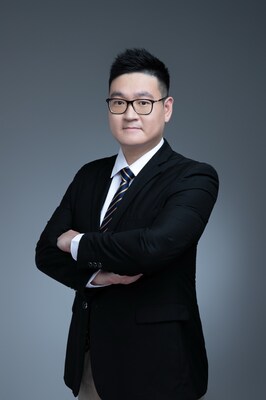
To date, the electricity-free cooling technology developed by Professor Tso’s research team at i2Cool has been commercialized and deployed in more than 30 cities and regions around the world, with more than 500 projects completed.
01 Academic excellence: recognizing technological contributions
In 2025, Professor Tso was elected a Fellow of the Hong Kong Young Academy of Sciences and awarded the National Science Fund for Excellent Young Scholars in recognition of his outstanding contributions to scientific innovation and technology commercialization. In 2024, he received the Hong Kong Engineering Science and Technology Award from the Hong Kong Academy of Engineering Sciences and was elected a Young Fellow of the Academy. The same year, he was appointed research fellow by the Research Grants Council (RGC), confirming his academic leadership in the field of building energy technologies.
This recognition is not a coincidence. Since 2020, Professor Tso has consistently been ranked among the “top 2% of global scientists” at Stanford University.
His academic influence is evident not only in honors but also in the tangible results of his research. Professor Tso has published over 100 articles in leading international journals, including Science, Sustainability of nature, Natural communicationsAnd Scientific advances. His groundbreaking research on cooling ceramics has notably been published in Science in 2023, attracting significant international attention.
Beyond academia, Professor Tso has filed nearly 20 patents, successfully translating these innovative technologies into commercially viable products.
02 Research breakthroughs: from nature-inspired discoveries to industrial innovation
Professor Tso’s research team took inspiration from the Sahara silver ant, whose unique hair structures enable exceptional solar reflectivity and mid-infrared emissivity, allowing it to survive the extreme heat of the desert. Inspired by this, the team integrated materials science, optics, and thermodynamics to develop multi-component, multi-scale nanoparticle materials capable of efficiently reflecting solar radiation in the 0.25-2.5 μm range while emitting thermal radiation in the 8-13 μm atmospheric window.
The heart of passive radiative cooling (PRC) technology lies in harnessing high solar reflectance and mid-infrared emissivity to reflect sunlight and radiate heat into space, facilitating the natural cooling of surfaces without electricity or refrigerants. This is a true energy-free cooling solution.
03 i2Cool: Translating research into global impact
In 2015, when Professor Tso began studying the silver ant’s cooling mechanism, it was difficult to predict that this discovery would lead to a climate technology business contributing to global decarbonization. In 2021, under CityUHK’s HK Tech 300 Innovation and Entrepreneurship Program, Professor Tso co-founded i2Cool Limited with Dr. Martin Zhu.
The company’s first product to market, the No-Electricity Cooling Coating (i2Coating), achieves up to 95% solar reflectivity and high mid-infrared emissivity, outperforming traditional thermal insulation coatings that struggle to exceed 90% solar reflectance. i2Coating was officially launched in September 2022 for building applications, providing sub-ambient cooling performance through efficient solar reflection and thermal radiation.
04 Global deployment: technology implementation and measurable impact
To date, i2Cool’s passive radiative cooling technology has been deployed in more than 30 countries and regions, covering more than 800,000 square meters worldwide in more than 500 projects. The company’s products have saved nearly 16 million kWh of electricity and reduced carbon emissions by more than 15 million kilograms.
The range of applications of the technology continues to expand. In addition to the initial i2Coating, i2Cool has developed electricity-free cooling products such as i2Membrane and i2Film, addressing the problems of overheating roofs and glass facades. The technology is being implemented in notable projects including Dubai Mall, Hong Kong Coliseum and volunteer stations for the 15th China National Games.
05 Looking Ahead: Leading Research and Industry Transformation
With Professor Tso’s promotion to Professor of Energy and Sustainability, he will lead further explorations in electricity-free cooling technologies as a principal investigator in the School of Energy and Environment. Supported by the Hong Kong Research, Academia and Industry Sectors One-plus (RAISe+) Program, i2Cool is developing three next-generation materials: Passive Radiative Cooling Ceramics (PRCC), Passive Radiative Cooling Pavement Materials (PRCP) and Biodegradable Dual-Mode Thermal Management Textiles (Bio-DTMT). These innovations aim to provide complete electricity-free cooling solutions for buildings, roads and personal thermal management.
i2Cool’s long-term vision is to establish a complete electricity-free cooling ecosystem, focused on advanced materials science and diversified commercial applications. Against the backdrop of global “double carbon” goals, the company aims to leverage cutting-edge innovation to significantly contribute to energy efficiency and the reduction of carbon emissions worldwide.
CONTACT: i2Cool Limited, pr@i2cool.com
 View original content to download multimedia:^ https://www.prnewswire.com/apac/news-releases/professor-edwin-tso-promoted-to-chair-professor-at-city-university-of-hong-kong-leading-a-new-journey-in-electricity-free-cooling-technology-302706554.html
SOURCE i2Cool Limited